Government Steps Up Gas Exploration Support
New Zealand is increasing public investment in domestic gas exploration, committing a combined NZ$36 million to two projects designed to improve energy security and encourage new exploration activity.
The funding, announced by Resources Minister Shane Jones and Associate Finance Minister Chris Bishop, will support EnZed Energy’s offshore Kaheru exploration programme in the Taranaki Basin and a major seismic-data initiative led by Schlumberger New Zealand (SLB).
The investments are being made through New Zealand’s Gas Security Fund, which was established to support projects capable of increasing gas availability as the country manages declining reserves and transitions toward a greater share of renewable energy.
NZ$21.5 Million for Kaheru Offshore Prospect
Australian explorer EnZed Energy will receive NZ$21.5 million through a time-limited equity arrangement to advance exploration of the Kaheru prospect offshore Taranaki.
The project has an estimated total cost of NZ$71 million, with EnZed seeking a further NZ$49.5 million from other investors.
The initial programme is intended to establish whether commercially recoverable gas exists within the Kaheru prospect. The government estimates that the permit could contain up to 182 petajoules of additional gas reserves if exploration is successful. That figure would represent almost one-quarter of New Zealand's proven and probable gas reserves recorded at the beginning of 2026.
EnZed was awarded a 12-year petroleum exploration permit covering approximately 546 square kilometres of the offshore Taranaki Basin in July.
The permit was the first new offshore petroleum exploration licence issued after New Zealand reversed its previous ban on new offshore oil and gas exploration.
Gas Reserves Have Fallen Sharply
The push for new exploration comes as New Zealand's domestic gas reserves continue to decline.
Government data shows that proven and probable natural gas reserves stood at 731 petajoules on January 1, 2026, down 23 percent from the previous year. The government says this was the lowest level recorded since petroleum-reserve records began more than two decades ago.
Officials argue that new exploration could provide additional domestic supply while supporting electricity generation during periods when hydro, wind and solar generation are insufficient.
The government has also stressed that exploration does not guarantee a commercial discovery, but says expanding exploration activity is necessary to understand what resources remain available.
SLB to Build Basin-Scale Exploration Dataset
The second project will receive NZ$14.5 million and is being led by Schlumberger New Zealand.
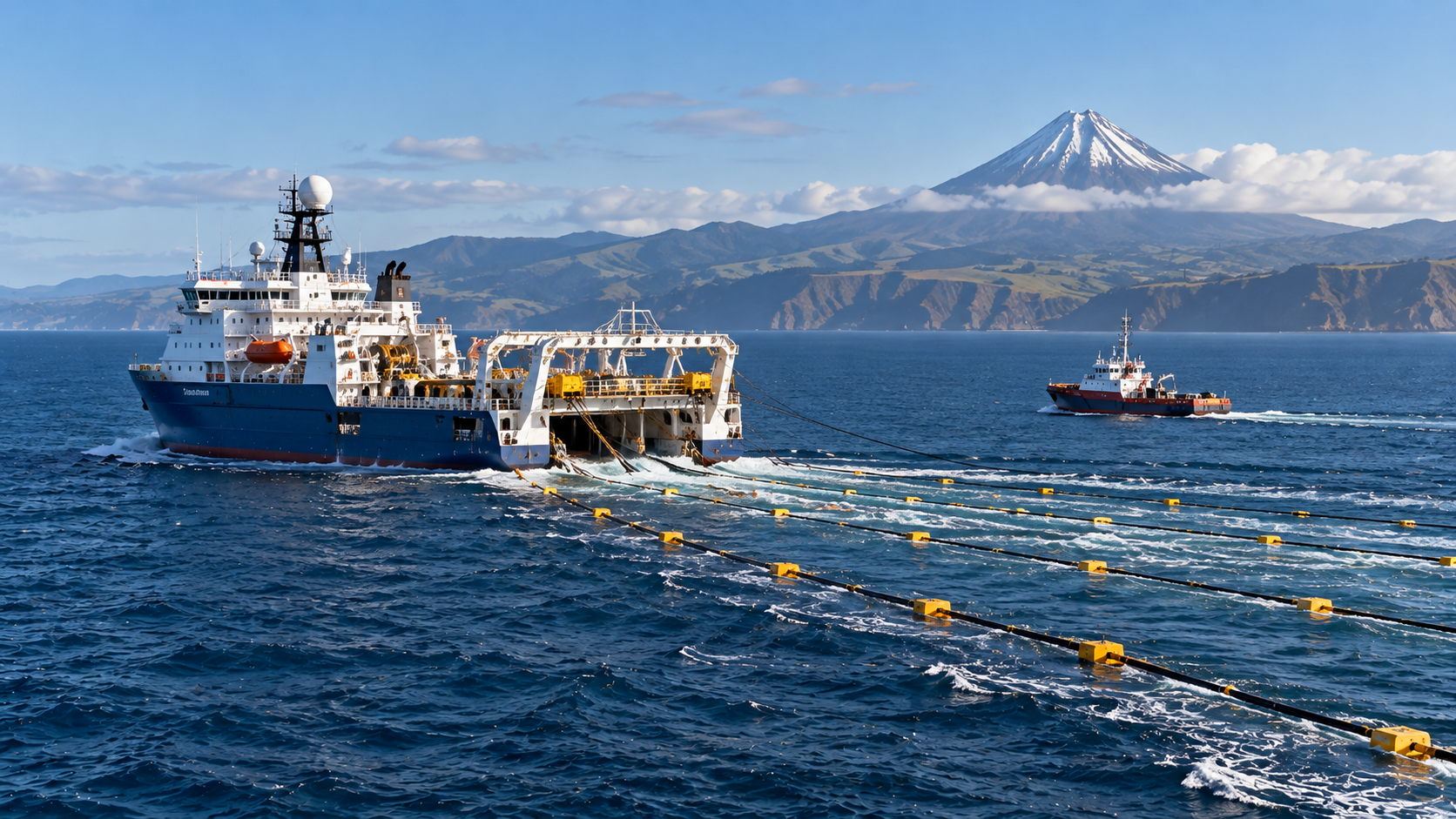
Under the arrangement, SLB will combine existing public and private seismic information with proprietary technology to create a basin-scale offshore subsurface dataset covering key exploration areas.
The resulting dataset will use AI-enabled technology to bring fragmented geological and seismic information together into a format that can be more easily accessed and interpreted by exploration companies.
Importantly, the government says industry will receive free access to the dataset for two years, with the objective of lowering exploration costs and encouraging international companies to consider investment opportunities in New Zealand.
Focus on Taranaki and Other Basins
The SLB initiative will cover geological information from the Taranaki, East Coast and Great South basins.
By making a larger volume of seismic information easier to access, the government hopes to improve understanding of New Zealand's offshore geology and make potential exploration targets more attractive to investors.
The project represents a different approach from directly funding drilling: rather than financing a single exploration well, public money is being used to improve the information available to multiple potential explorers.
New Zealand Seeks to Rebuild Exploration Investment
The latest funding follows a broader government effort to revive New Zealand's petroleum exploration industry after years of declining investment and falling domestic gas production.
The Gas Security Fund was created to support projects that can increase gas availability in the short, medium and long term. Earlier funding rounds supported projects by New Zealand producer Todd Energy, including drilling and production work in the Taranaki region.
EnZed is also pursuing another offshore opportunity. In October, the company submitted an application for a second petroleum exploration permit covering approximately 2,400 square kilometres around the Toutouwai prospect in the Taranaki Basin.
For New Zealand, the strategy represents an effort to balance its long-term transition toward renewable energy with the immediate need for reliable gas supplies for electricity generation and industry.
If exploration succeeds, the Kaheru project could eventually become another source of domestic gas. For now, however, the government funding is aimed at establishing whether the resource can be commercially developed.